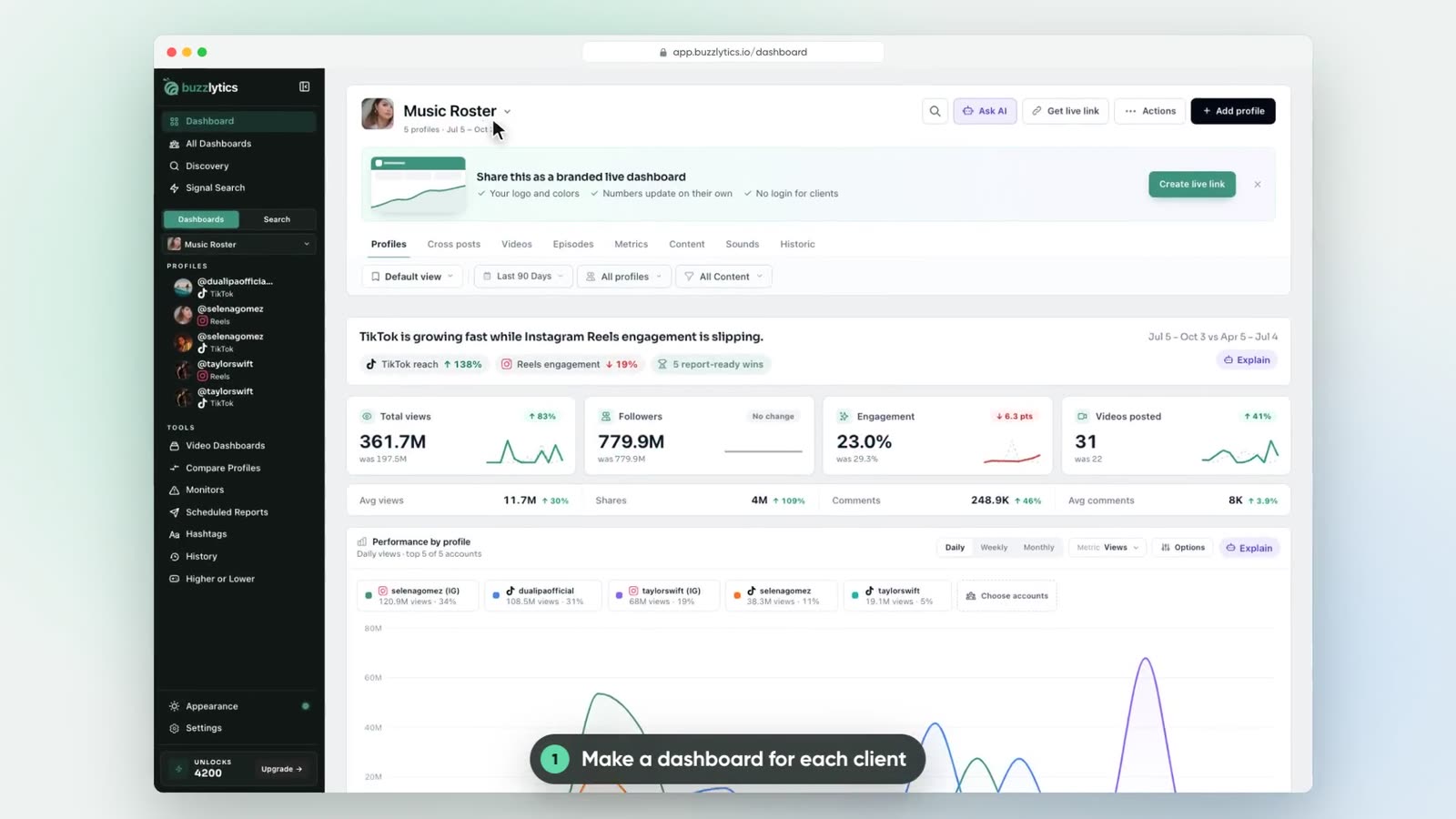
Client reporting for influencer agencies (without the spreadsheet chaos)
A practical workflow for agencies that need client-ready creator updates every week.
Learn more →Guides
Practical reads on reporting, comparison, vetting, and monitoring for teams running creator research at scale.
A practical workflow for agencies that need client-ready creator updates every week.
Learn more →Stop debating who's winning. Stack two profiles and read the gaps in seconds.
Learn more →Engagement rate beats follower count when you're vetting creators for campaigns.
Learn more →Put reporting on autopilot and meet clients where they already work.
Learn more →The category overview for teams that live in short-form video data.
Learn more →One score on every profile — built from engagement, not vanity metrics.
Learn more →The status quo works until you have more than two clients.
Learn more →Watch creators around the clock without refreshing profiles manually.
Learn more →Both track public short-form performance. The right choice depends on whether you need faster video operations or lower-cost account history and client delivery.
Learn more →Exolyt starts at $400/mo and stops at TikTok. Here's what that buys — and what it doesn't.
Learn more →Pentos is a TikTok trend tracker. Buzzlytics is a cross-platform account and reporting workflow. Here is where each fits.
Learn more →Both analyze public creators without requiring their login. Buzzlytics goes wider on platforms and recurring operations.
Learn more →Metricool is excellent value for publishing connected brands. Buzzlytics is purpose-built for public rosters you do not own.
Learn more →Hootsuite is a broad publishing and engagement suite. Buzzlytics is a focused public creator and competitor intelligence layer.
Learn more →Modash runs influencer relationships end to end. Buzzlytics is the lighter operating layer for teams that already have the roster.
Learn more →Social Blade is the classic free stats lookup. Buzzlytics is built for teams that track a roster and report on it.
Learn more →Social Blade shows growth. These tools add rosters, reports, discovery, or publishing. Here is which one fits which job.
Learn more →HypeAuditor helps you find and vet influencers. Buzzlytics helps you track the ones you already work with.
Learn more →Sprout Social runs your own social accounts. Buzzlytics tracks creators and competitors you do not own.
Learn more →Upfluence runs influencer programs end to end on an annual contract. Buzzlytics tracks and reports on creators month to month.
Learn more →Later schedules your own posts and runs influencer programs. Buzzlytics tracks creators you do not own and reports on them.
Learn more →Both track views across platforms without creator logins. ViewTrack prices by tracked videos. Buzzlytics adds research, payouts, and AI on top.
Learn more →CreatorCore is a demo-led campaign and creator CRM suite. Buzzlytics is self-serve analytics with published prices, live dashboards, and AI.
Learn more →Run one roster in parallel, verify the numbers, and switch the deliverable—not your whole stack—first.
Learn more →Free counters, SMM suites, and enterprise platforms — mapped by what they actually do.
Learn more →ChatGPT is excellent at the thinking. It has no memory of what your creators actually posted.
Learn more →Claude plus your actual creator data is a different tool than Claude alone.
Learn more →Perplexity finds what's published. Views gained over a payout window is never published.
Learn more →Ask your assistant who you owe this month, and have it actually know.
Learn more →